Observing the Ephemeral: The Renewed Butterfly Collection
Butterflies are often associated with beauty, lightness, and ephemerality. Yet when viewed within the context of a museum collection, they reveal far more complex narratives – stories of scientific inquiry, exploration, geographical exchange, collecting practices, and biodiversity.
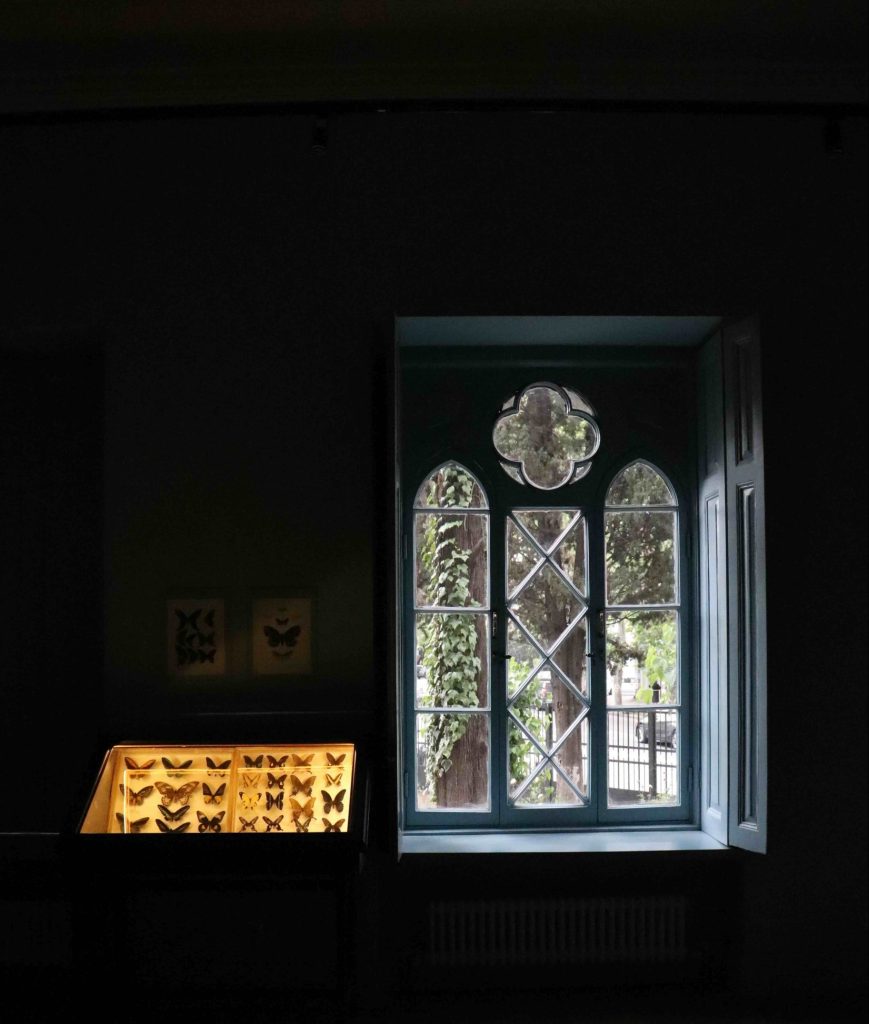
The exhibition Observing the Ephemeral: The Renewed Butterfly Collection revitalizes one of the State Silk Museum’s oldest collections, whose formation began in the 1880s. Significantly expanded in 2025 through a museography project supported by AIMF, the collection today brings together both diurnal and nocturnal butterflies of European, Caucasian, and tropical origin. Much like the museum itself, the collection is the result of multiple journeys, international exchanges, and scientific collaborations accumulated over time.
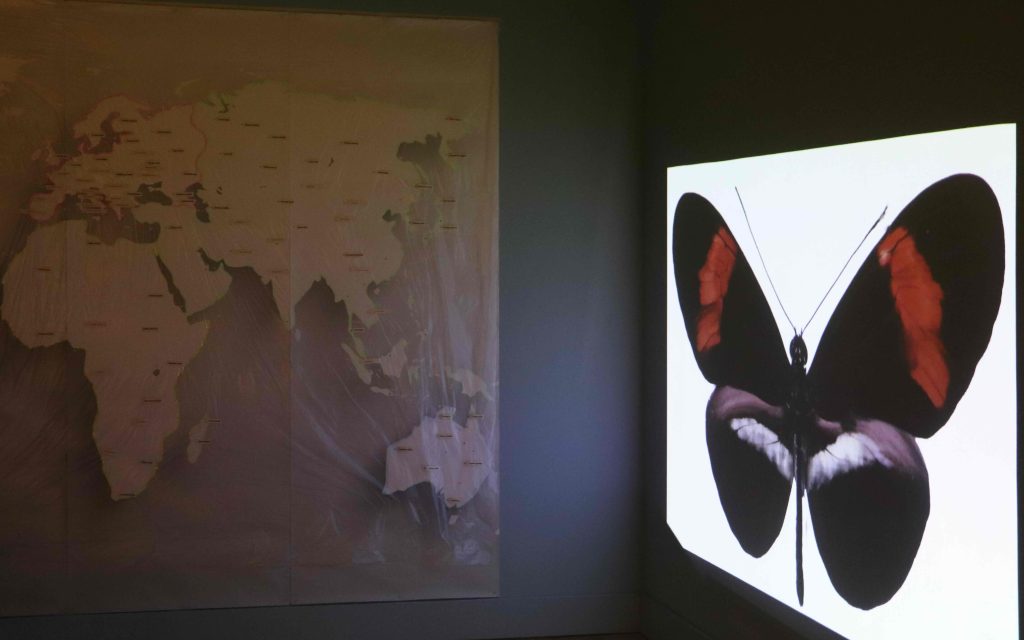
A map presented within the exhibition visualizes these connections. Spanning six continents, the collection’s geography reflects the global scale of knowledge production surrounding the natural world and highlights the extensive networks through which specimens, information, and scientific practices circulated.
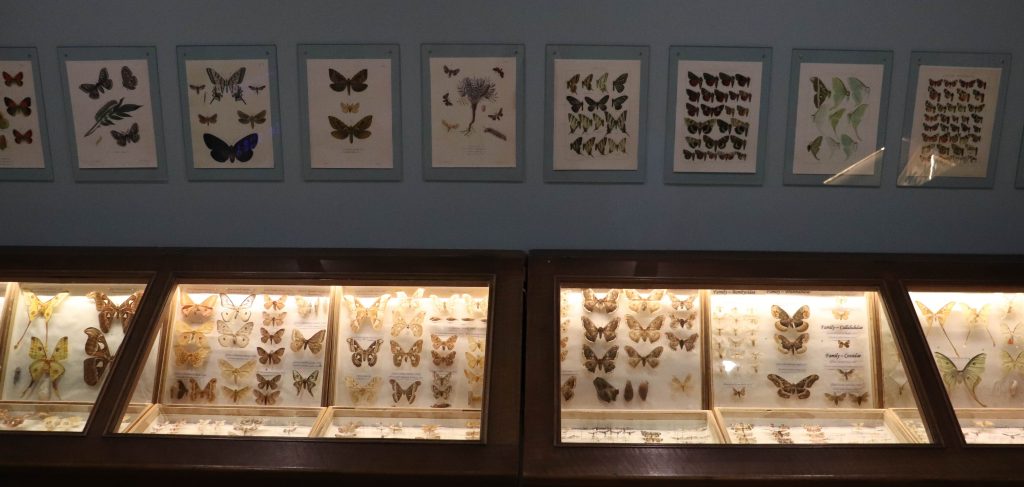
The exhibition is not solely concerned with biological diversity. It also explores the culture of observation itself, how humans have studied, described, illustrated, and preserved nature. In this context, particular attention is given to reproductions based on rare publications preserved in the museum’s library. Illustrations by entomologists N. Romanov and A. Seitz reminds us that scientific research often generates its own distinctive visual language and invites reflection on the close relationship between natural history and artistic representation.
The species presented in the exhibition reveal the remarkable diversity of nature’s adaptive strategies. Members of the Saturniidae family, which includes some of the largest moths in the world, are distinguished by eye-like markings on their wings. These patterns are not decorative accidents but highly effective defense mechanisms designed to mislead predators by creating the illusion of a much larger creature. In this case, nature produces sophisticated visual forms whose primary purpose is survival.
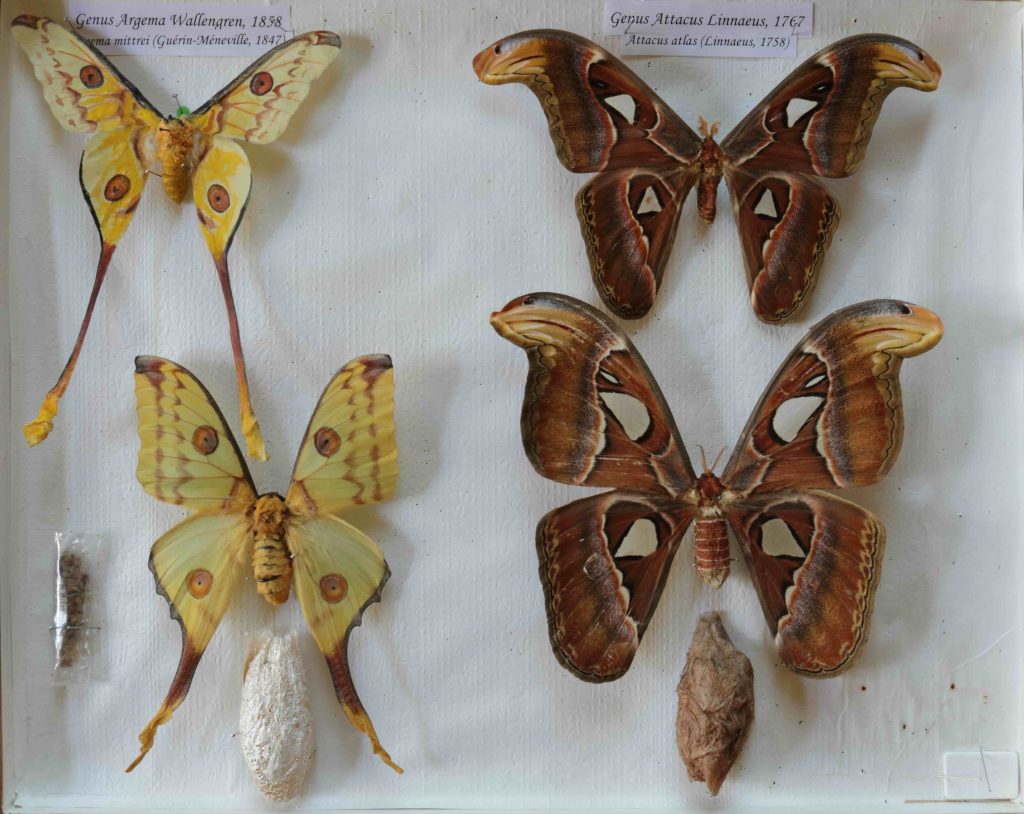
Equally striking is Actias luna, whose elongated, elegant tails make it one of the most memorable moth species in the collection. These delicate structures serve not merely an aesthetic function but form part of a complex defensive system. Predators often target the tails rather than the insect’s vital body parts, increasing the moth’s chances of survival. Such adaptations reveal the extraordinary ingenuity embedded within even the most fragile forms of life.
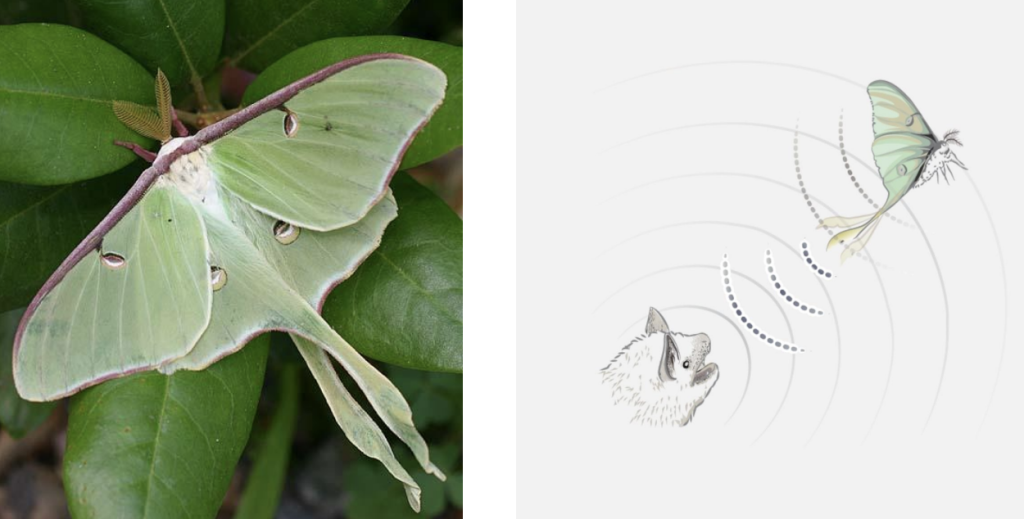
Several species within the exhibition are directly connected to the museum’s central subject of silk. Antheraea yamamai, the Japanese oak silkmoth, and Pachypasa otus historically contributed to silk production through the use of their cocoons. These examples demonstrate that the relationship between nature and material culture extends beyond symbolic associations. Entomology emerges here not as an isolated scientific discipline but as a field deeply interconnected with textiles, technology, craft, and human labor.
It is precisely this multilayered character that gives the exhibition its particular significance. Seemingly fragile and ephemeral creatures become points of intersection between nature, science, and culture. Their wings do more than display colour and form; they tell stories of survival, transformation, migration, and the invisible connections that link continents, ecosystems, and systems of knowledge.
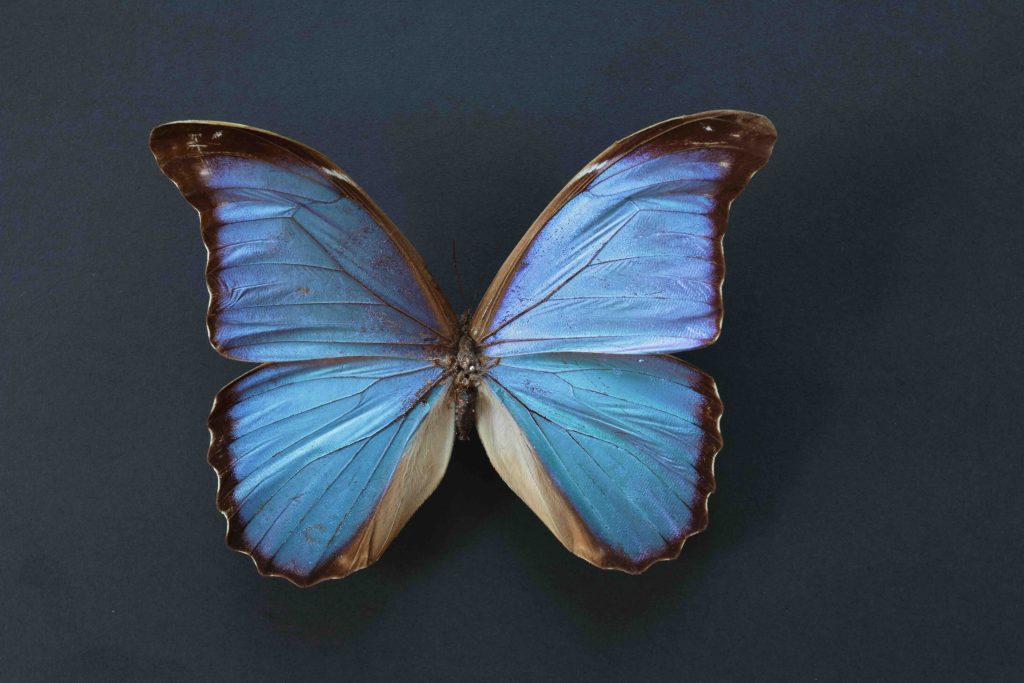
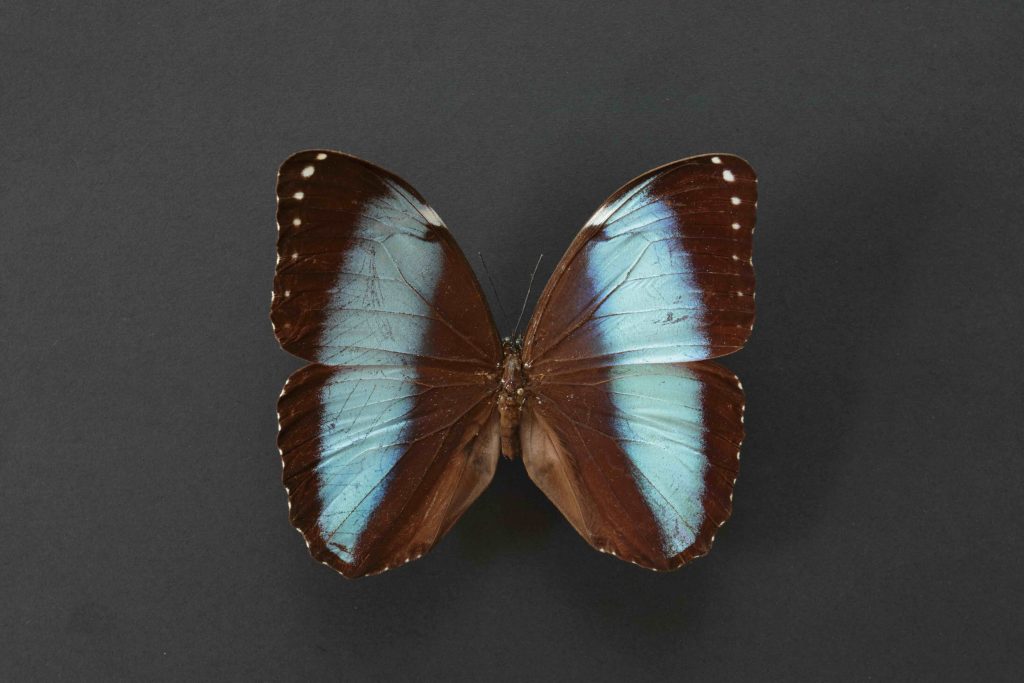
Ultimately, Observing the Ephemeral offers an experience grounded in attentive looking. In a world increasingly shaped by fragmented attention, the exhibition encourages visitors to slow down and engage with the smallest details. The butterfly collection reminds us that some of the most profound stories are often hidden within the most delicate forms.
* The educational information on butterflies and moths presented in this blog was researched and prepared by the museum’s educational programmes coordinator and biologist, Sophio Injia. Between 2025 and 2026, Sophio Injia, together with conservator and biologist Valeri Petrov, carried out the cataloguing process of the museum’s entomological collection.